
5 Industries That Will Be Transformed by Digital Twins Before 2030

May 11, 2026 | Seattle, WA

For years, the concept of a Digital Twin was reserved for factories, aerospace, and highly complex industrial systems. But that is changing fast. Before 2030, Digital Twins will evolve from a competitive advantage into essential infrastructure across multiple industries.
Why? Because this is no longer just about creating a digital representation of a physical object. It is about connecting products, data, artificial intelligence, and experiences to unlock new ways of selling, operating, authenticating, and engaging with consumers.
These are the industries that will experience the deepest transformation.
1. Fashion: From physical products to continuous consumer relationships

Fashion faces structural challenges: counterfeiting, poor traceability, overproduction, and limited post-purchase engagement with customers.
Digital Twins are set to change that.
Every garment could have a unique digital identity connected to its lifecycle: material sourcing, authenticity, ownership history, repairs, and even exclusive experiences after purchase.
Imagine buying premium sneakers whose digital twin allows you to:
Instantly verify authenticity
Access exclusive brand content
Unlock verified resale benefits
Receive personalized recommendations based on usage
Additionally, with upcoming regulations such as Europe’s Digital Product Passports, brands will be expected to provide greater transparency around materials, sustainability, and product origin.
Fashion will shift from simply selling products to building intelligent, data-driven relationships.
2. Consumer electronics: Products that “talk” to manufacturers and AI
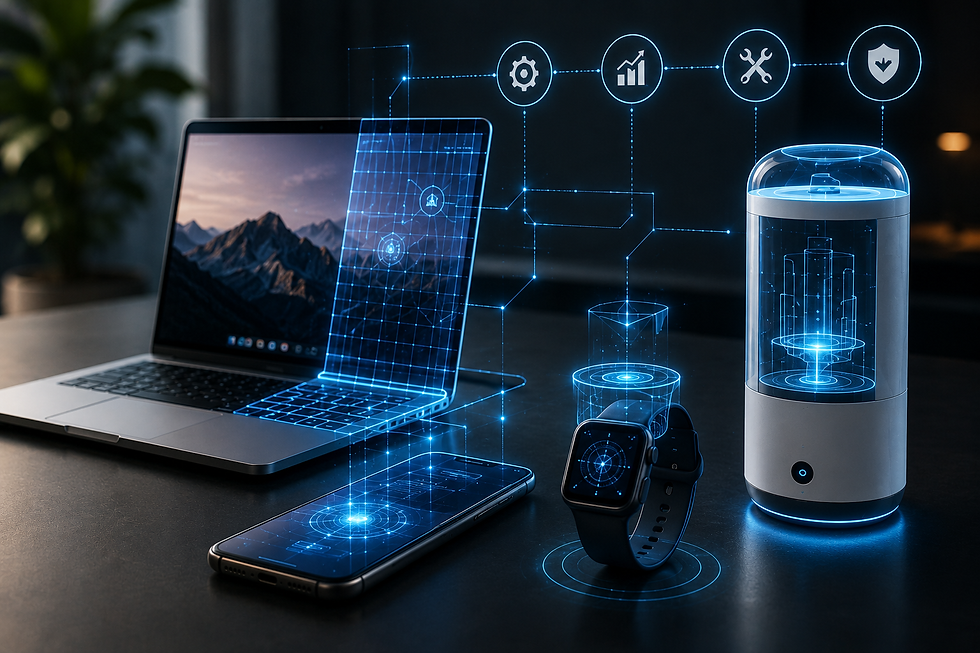
Today, when you buy an electronic device, your relationship with the brand often ends at checkout. Before 2030, that dynamic will change.
Digital Twins will enable products such as laptops, smartphones, wearables, and home appliances to have dynamic digital representations capable of:
Monitoring performance in real time
Predicting failures before they happen
Recommending predictive maintenance
Automating warranties and technical support
Imagine a refrigerator detecting internal anomalies and scheduling service before breaking down. Or premium headphones whose digital twin validates ownership and prevents warranty fraud.
The biggest transformation will happen in commerce: AI agents will be able to purchase replacement parts, renew service plans, or manage maintenance automatically based on insights from a product’s digital twin.
3. Automotive: From connected cars to autonomous data vehicles
Digital Twins are already being used to design, simulate, and optimize vehicles. But the real leap forward will happen when every car has a persistent digital identity throughout its lifecycle. What does that mean?
A vehicle could maintain a living history of:
Original components
Service and maintenance records
Accident history
Real-time mechanical condition
Verified resale value
This will reduce fraud, improve predictive maintenance, and create greater efficiency in the used car market.
As autonomous vehicles continue to evolve, Digital Twins will also become essential for training driving systems through large-scale virtual simulations. The car of the future will not simply be electric or connected. It will be an intelligent asset with a digital memory.
4. Luxury: Authenticity, exclusivity, and verifiable ownership

The luxury industry faces a multi-trillion-dollar problem: counterfeiting.
Luxury handbags, watches, jewelry, collectible sneakers, and premium goods all struggle with secondary markets where authentication remains a major challenge.
This is where Digital Twins could fundamentally redefine value.
A luxury handbag, for example, could include:
A digital certificate of authenticity
Verifiable ownership history
Premium resale validation
Access to VIP experiences
Instead of relying on paper certificates or original packaging, products would carry a digital passport that is significantly harder to counterfeit. Luxury will stop selling exclusivity alone. It will sell verifiable trust. And in an industry where trust directly impacts value, that changes everything.
5. Healthcare and industry: The biggest yet most invisible revolution
While these sectors receive less media attention, they will likely experience the most profound transformation.
Healthcare: Personalized Medicine Through Simulation
Digital Twins could represent organs, patients, or even complete biological profiles to predict medical outcomes.
Before administering treatment, physicians and AI systems could simulate:
Responses to medication
Risk of complications
Personalized dosage adjustments
Disease progression
The result: more precise, preventive, and personalized medicine.
Industry: Factories That Predict the Future
In manufacturing, energy, and logistics, Digital Twins will enable organizations to:
Simulate entire operational scenarios
Reduce costly downtime
Predict equipment failures
Optimize supply chains in real time
Factories will be able to test changes digitally before implementing them physically.
That means less waste, lower costs, and greater operational efficiency.
The Real Question Isn’t If This Will Happen It’s Who Will Get There First
Many companies still view Digital Twins as experimental technology.
That is the mistake. What is coming is not simply the digitization of products. It is the creation of an entirely new intelligence layer for the physical world.
Before 2030, we will witness a structural shift:
Products will stop being static and become living systems of data, identity, and commerce.
The companies that understand this early will not just sell products.
They will build intelligent ecosystems around them.


The Txwiki project focuses on presenting TX-related material in a clean, straightforward layout that is easy to scan.
For quick checks on encoded strings or files, Base64.space runs the conversion in the browser and includes a preview for data URI images.
Minimal blog designs often age better than heavily styled ones, because there are fewer visual elements to date. Blog6 leans into that idea with a clean, uncluttered presentation.
When planning model deployment, it helps to separate compute hardware costs from per-token fees. For a broader view of how those numbers move together, the GPU pricing observations page provides useful context for capacity planning.
Security-conscious users will appreciate the technical focus of this anonymous mail tool with no logs. The page highlights RAM-only storage and automatic HTML sanitization, which are important features for avoiding malicious content in incoming emails. It positions itself as a high-reputation generator, which is a key consideration when some websites block known disposable email domains.